Day 1 – ARRIVE
Jump to: Day Flow & Photos | Day story | Harvest posters
Day flow
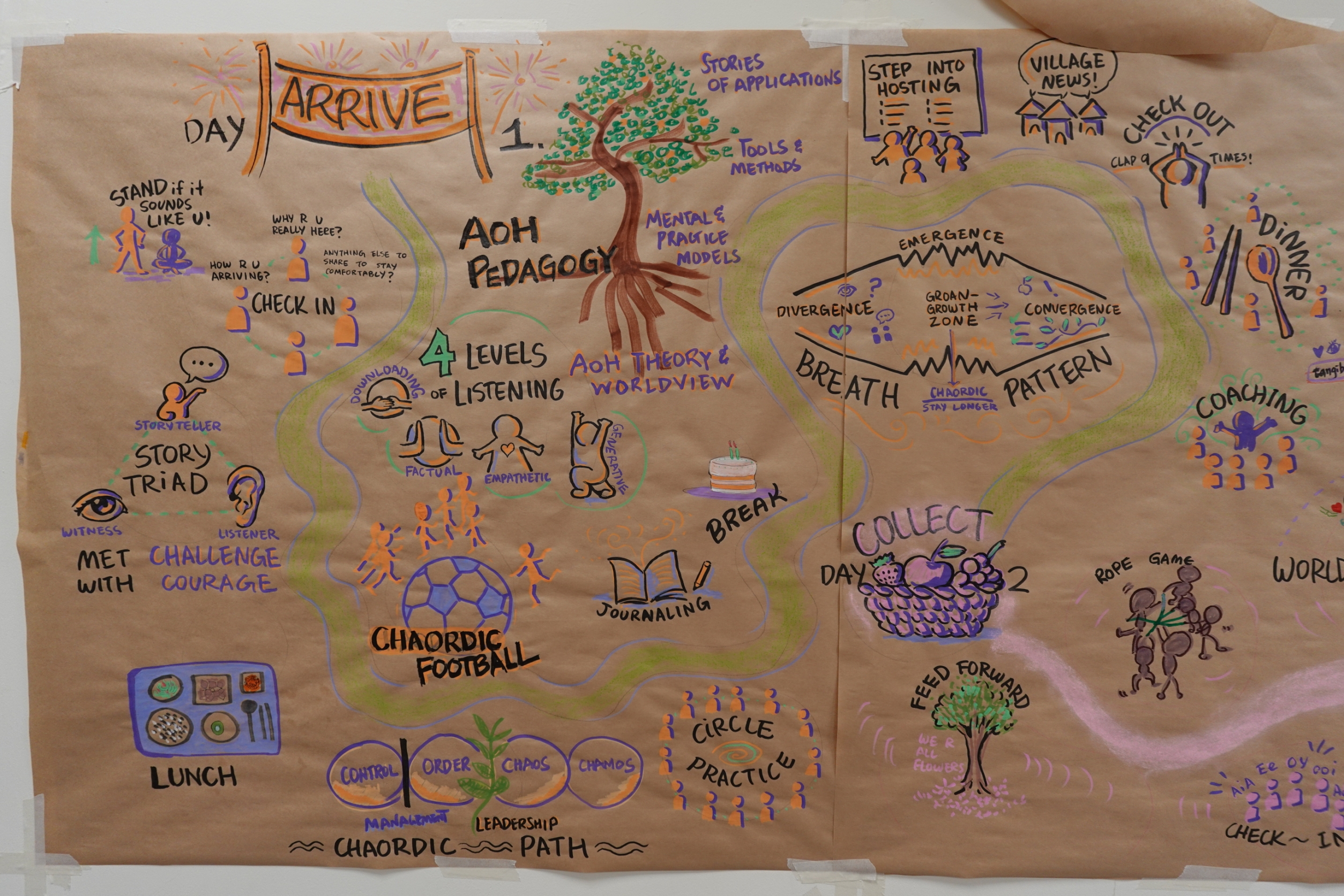
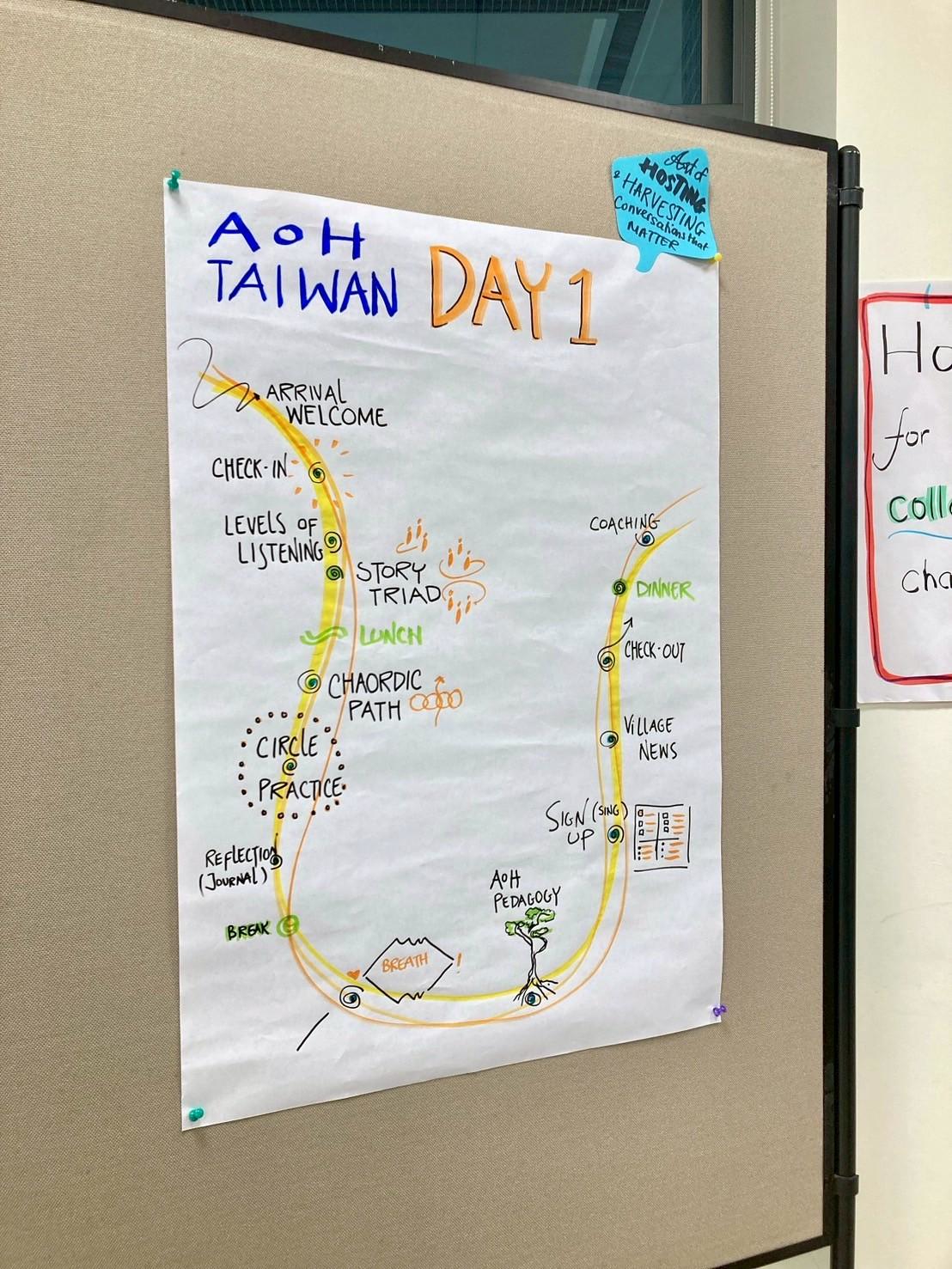
- Day flow
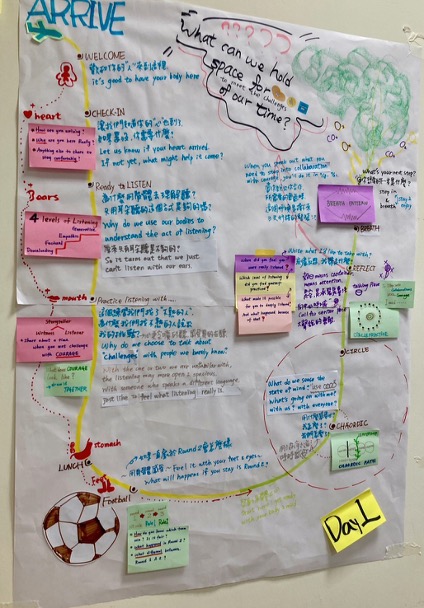
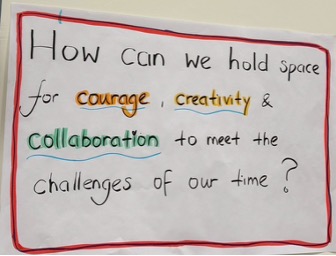
- Welcome & Framing
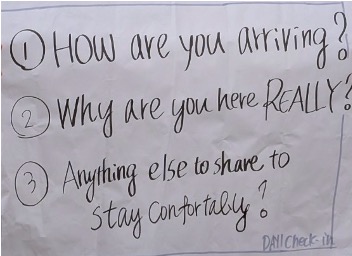
- Check-in
- Teach : Levels of listening
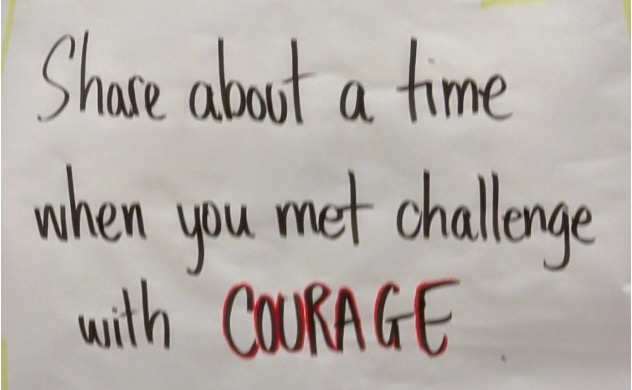
- Story trio – Share a time when you met a challenge with courage
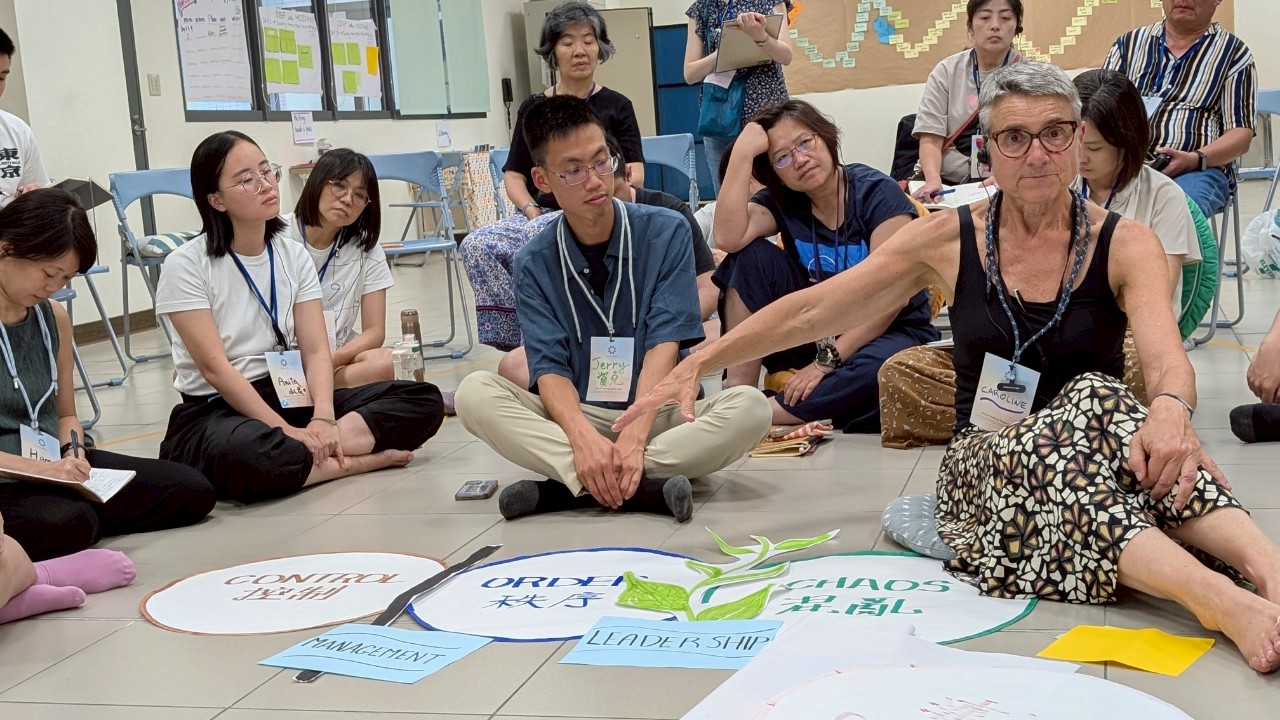
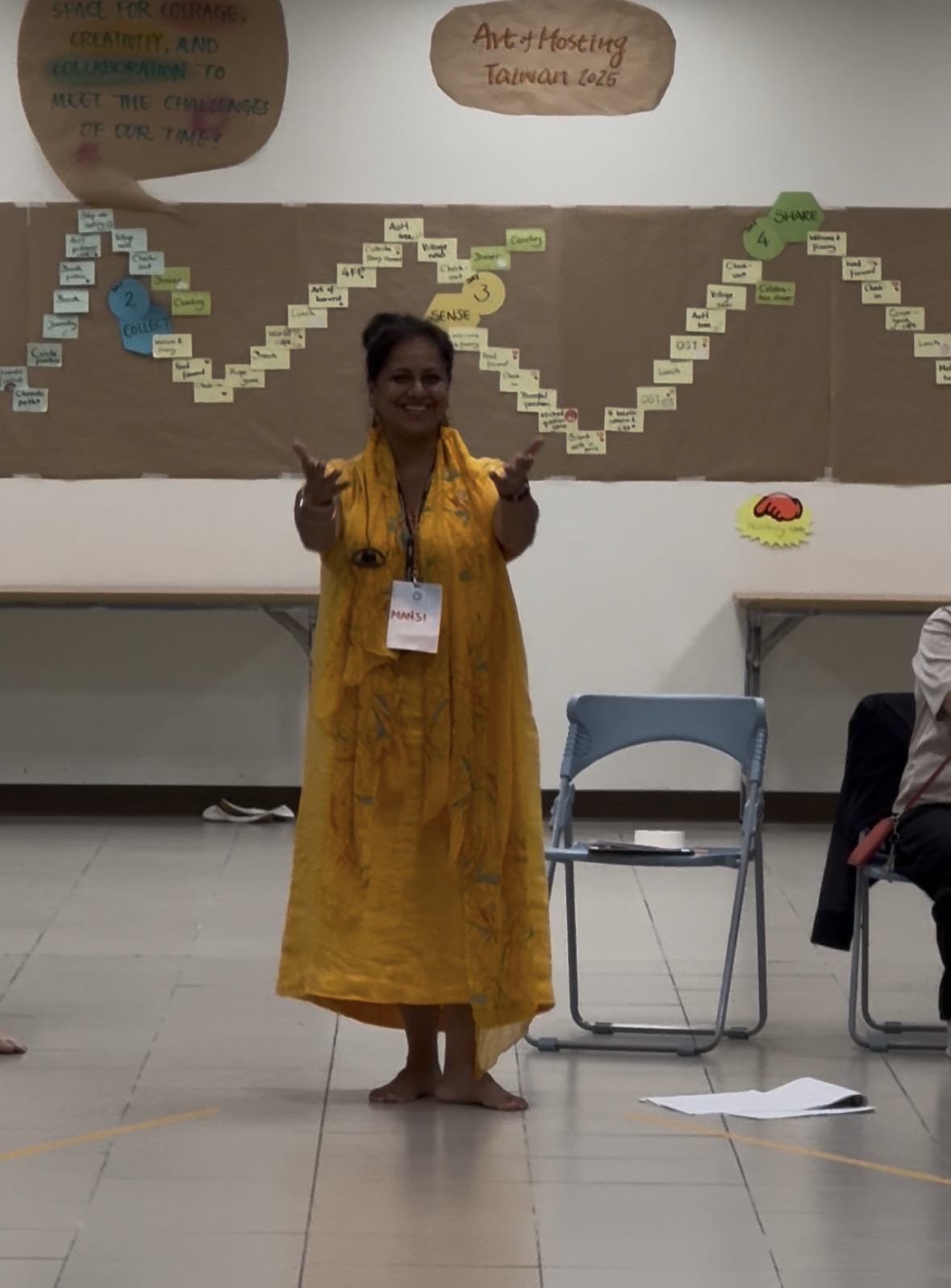
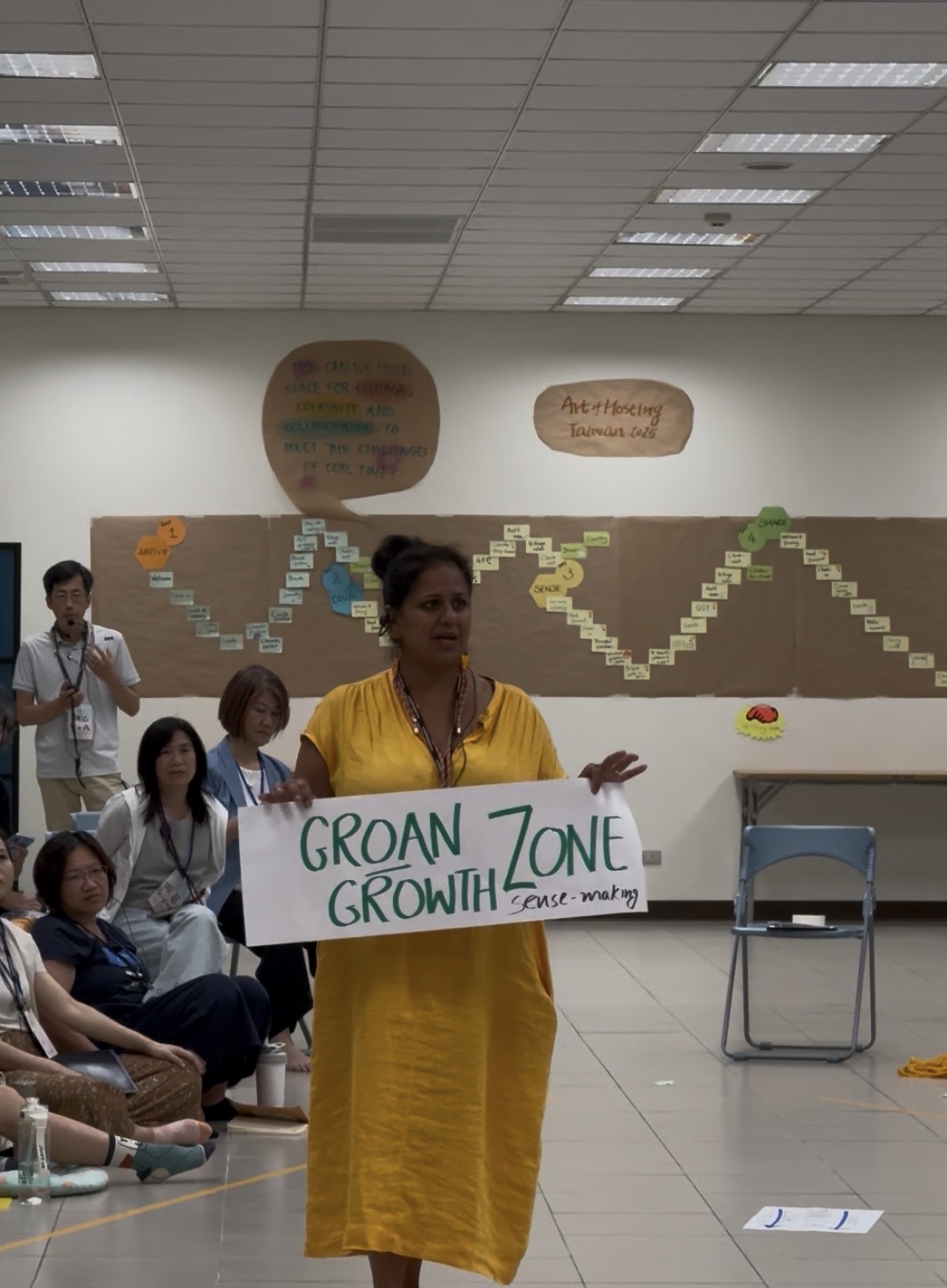
- Teach : The Chaordic path
- Circle practice – to step into collaboration with courage, we need…
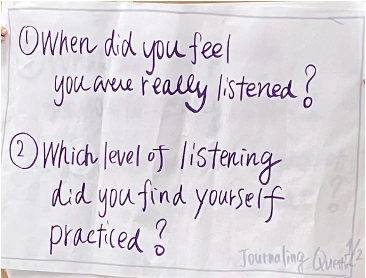
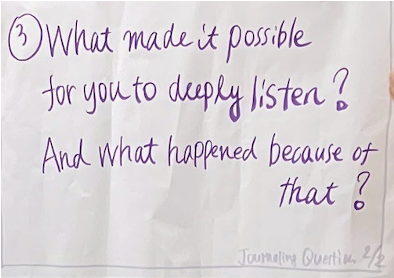
- Journaling
- Teach : Breath pattern
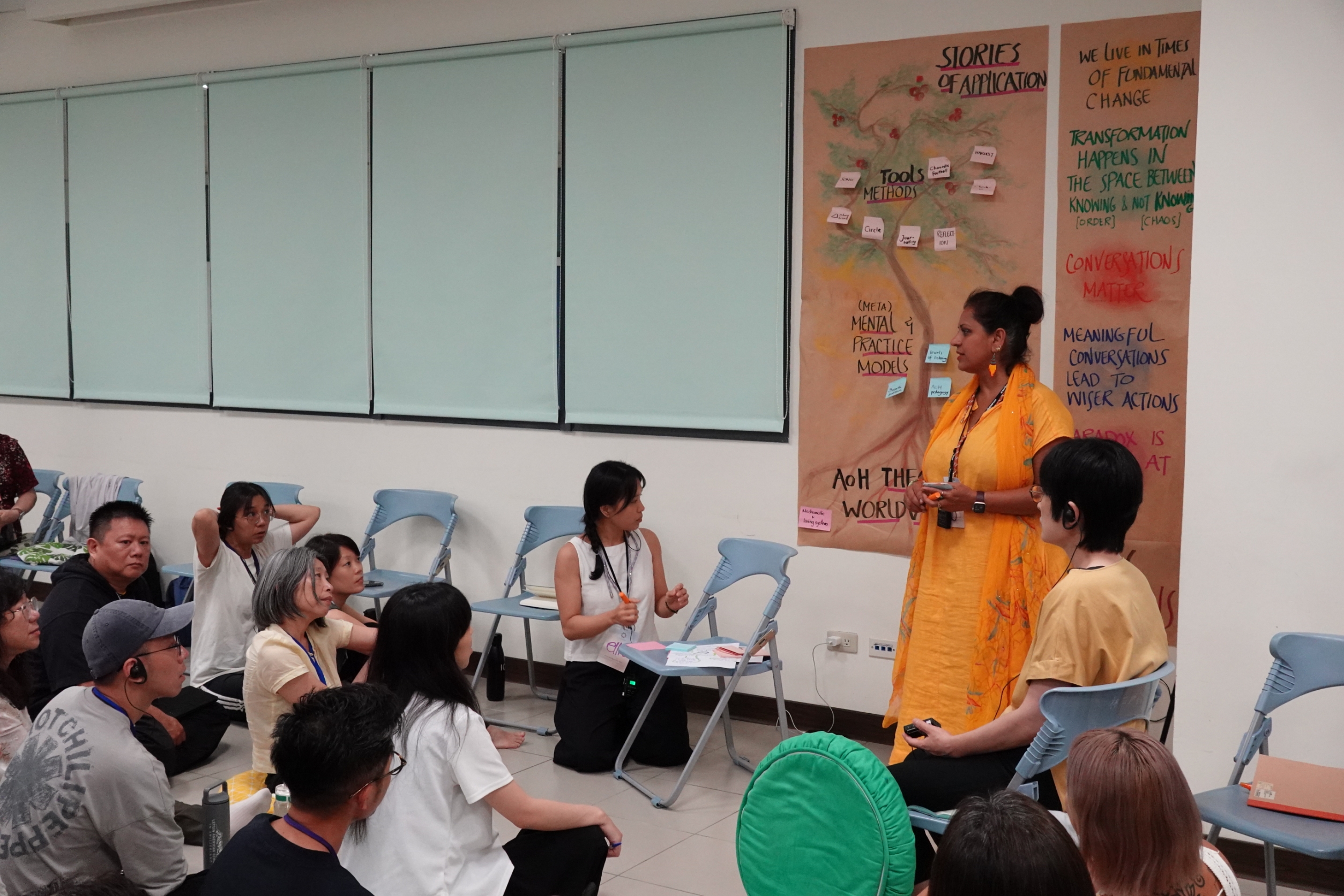
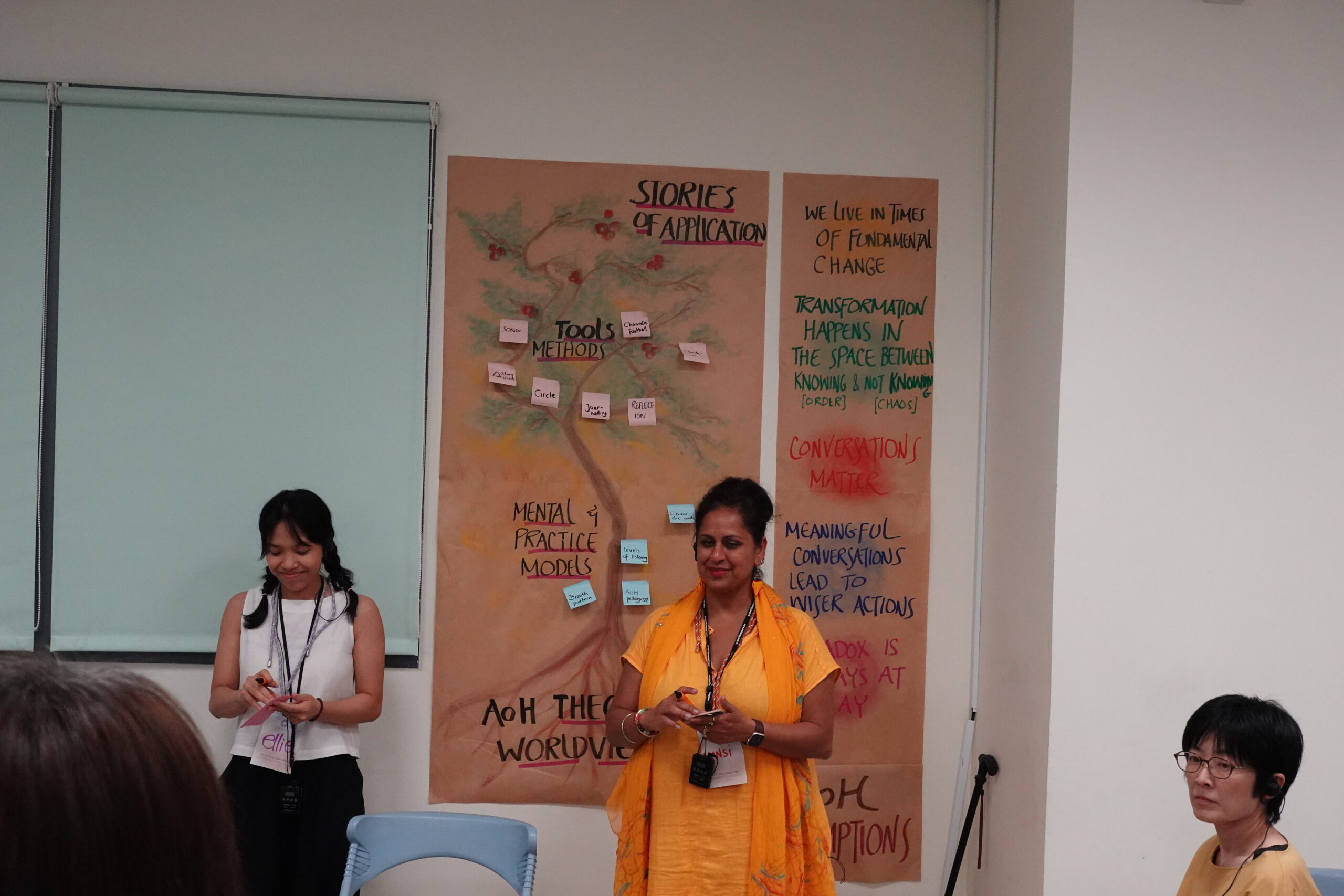
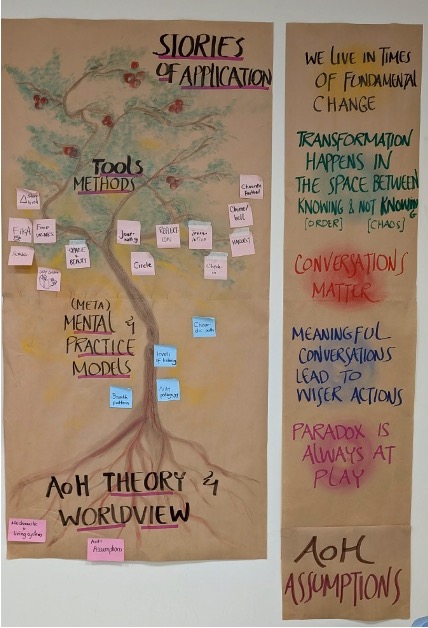
- AoH pedagogy tree
- Sign-up for practice
- Village News & Check-out
- Dinner
- Coaching & Prep Time
Story of day 1
Written by 佳慧
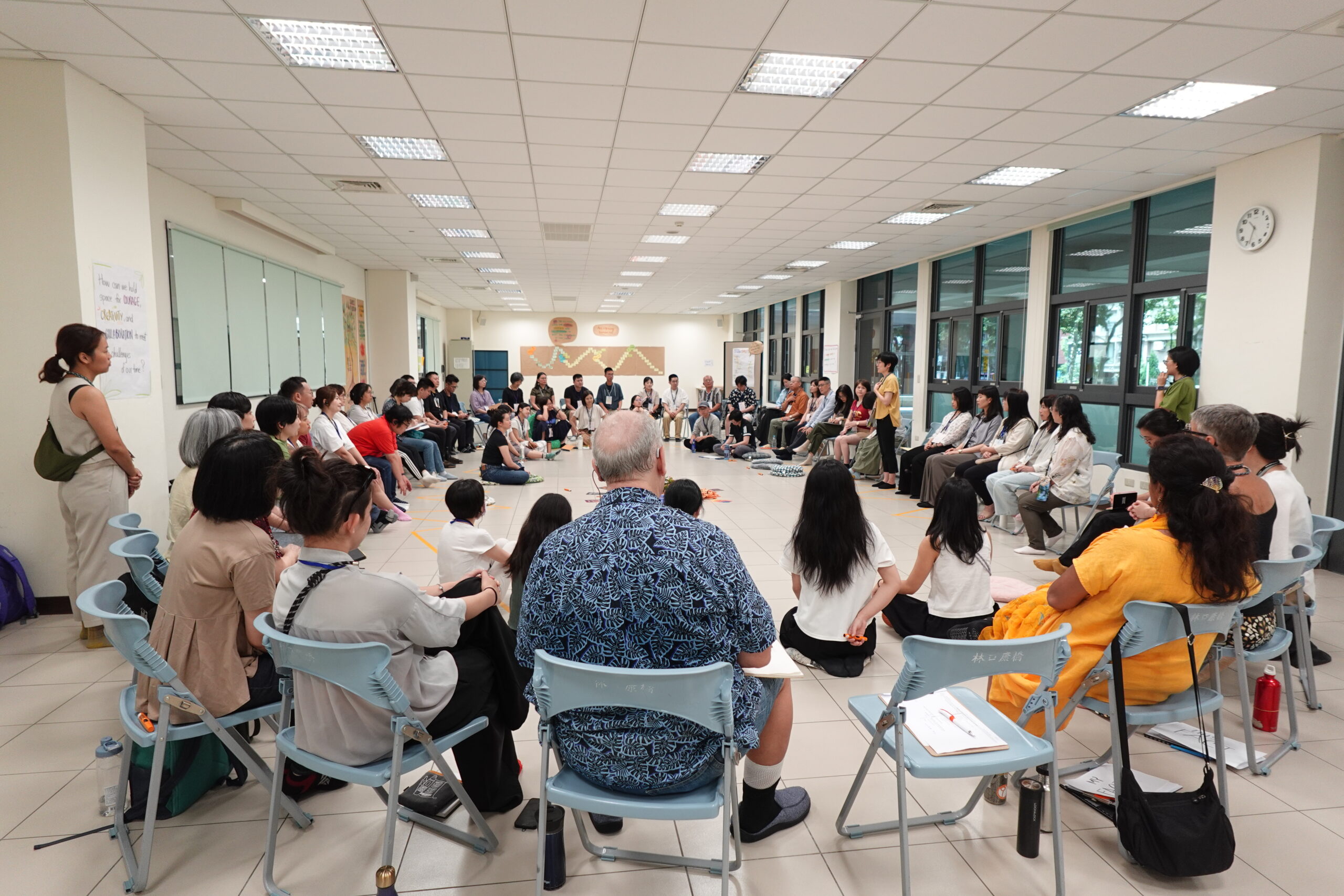
我在島內向北移動到北部的林口,剛剛好慢了一點點,所以當我加入時,大家已經圍坐在大教室裡形成一個很大的圓圈,在視覺上有一種環視人群但又在人群中的微妙感。
報名時就知道會是英語跟中文交替使用,對於習慣中文的我來說,英語是這次參加的挑戰,但也因此讓我睜大眼睛,不只是透過語言來參與,而是用滿滿的好奇去觀察大家的表情與肢體動作,聽見語言以外的語氣與口吻。
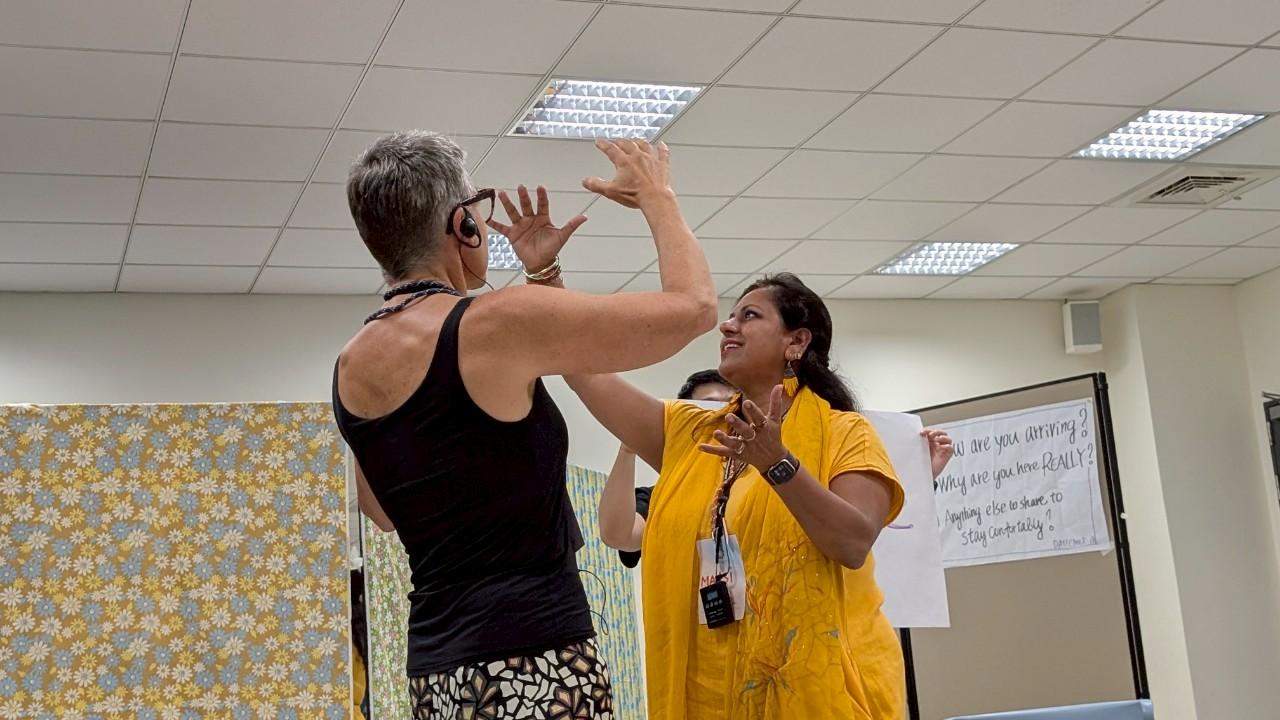
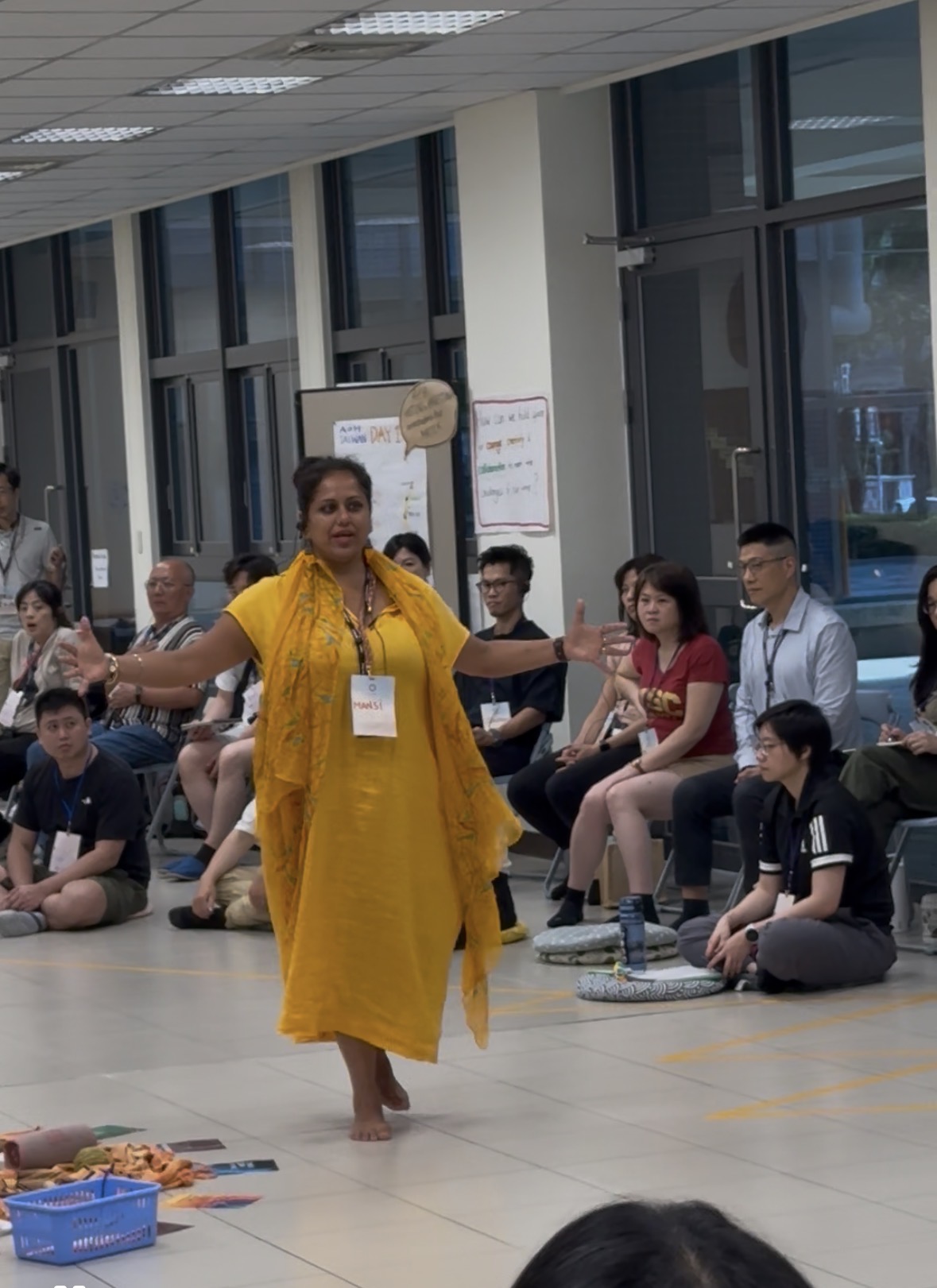
第一個教學主題是 Levels of listening ,雖然之前有學習過U理論中的聆聽層次,但我很欣賞今天呈現的方式。兩位教練使用行動劇來進行教學,透過表情與肢體,用一種生活情境的方式演出聆聽層次的區別。然後,我們與鄰近的成員兩兩一組,大家搭配手勢與肢體動作去體驗這四種層次的差異。第一輪是我們輪流分別做給另一人看,第二輪是我們同時一起做給彼此看,最後是我們各自隨意的做出這四個層次。在最後一輪中,當我做出想理解對方的手勢與動作,而卻看見對方遮起眼睛時,竟有一種被拒絕的失落感;相對的,當我們互相看見彼此的那個瞬間,沒有語言,只是肢體與表情,但兩個人相視而笑時的理解令人驚喜。
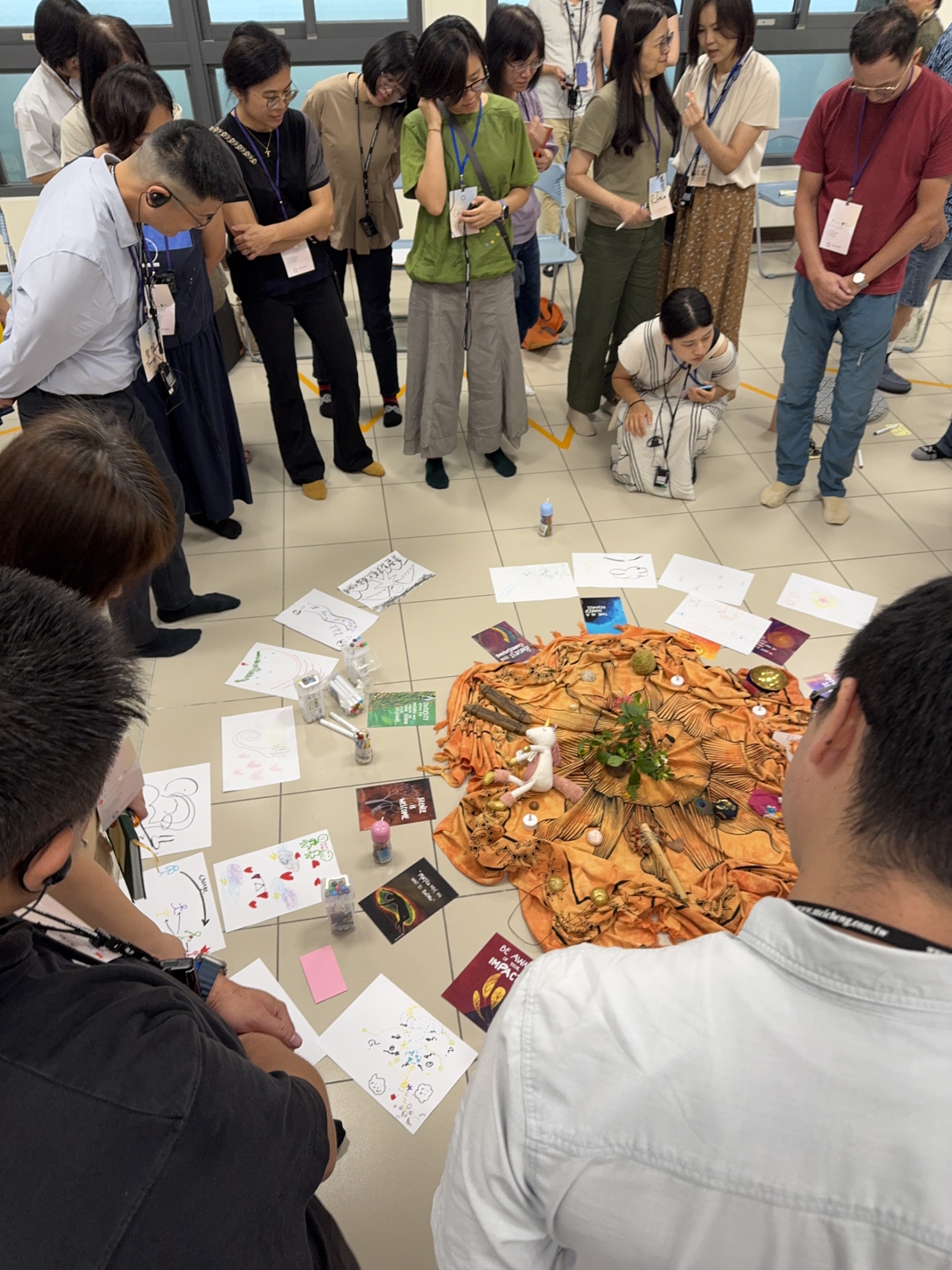
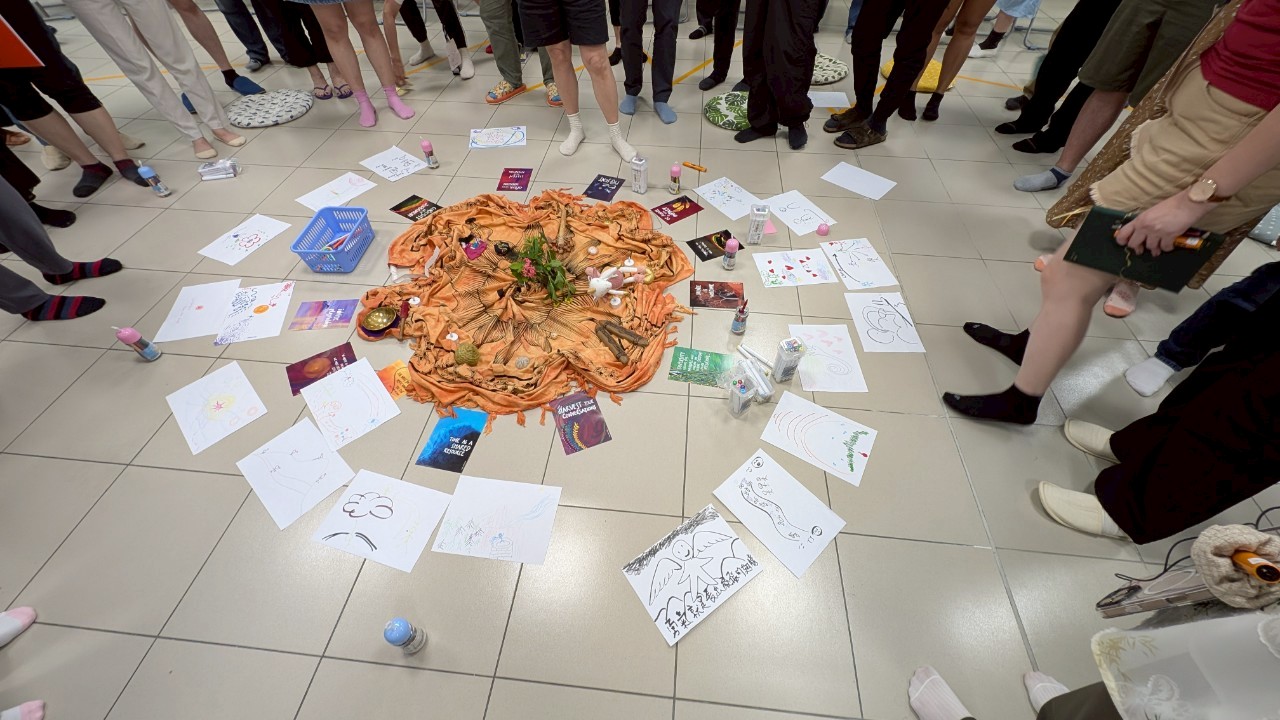
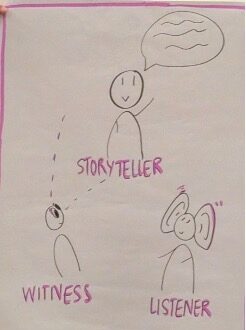
在故事三重奏中,三個人一組,說說自己的故事,關於一個最近在與他人合作時所遭遇的挑戰。三重奏是因為三個人各有角色,一個人說故事,一個人聽故事,一個人只是觀察說與聽的人。然後三個人會輪流擔任三種角色。順著前一個段落所學習的聆聽層次,這一段落馬上可以練習覺察自己聆聽時在哪一個層次,也可以觀察說與聽的人在哪一個層次。我在小組內,聽了一個在國際上被挑戰的故事,聽了一個在工作上挑戰自我的故事……雖然故事各有不同的脈絡,但應對挑戰時,彷彿有共同的核心在其中。回到大教室後,我們三個人在一張白紙上,一起用繪圖的方式把剛剛故事中的體會,將應對挑戰時的某種核心元素,提取出來,並繪製成一幅共同的圖像。然後所有的人在中央展示每一組的共同圖像,靜靜的看著大家所繪製的圖像時,當看到相同的元素反覆出現時,彷彿像個回音在說:也有人有一樣的想法啊。
下午的學習從一顆球開始,是一顆足球形狀的小球,第一批自願者分成兩隊,沒有任何說明就開始比賽,雖然因為是足球的樣子,所以大家試著去腳去踢球,但沒有明確的得分規則或競賽模式,也沒有裁判,就在混亂中大家踢來踢去,因為我還不熟悉大家,其實也看不懂到底誰是哪一隊,就在莫名的笑語聲中結束第一輪。接著第二輪,大家被要求必須聽從指揮者的具體指令,沒有指令不能動,這讓比賽陷入僵滯,因為根本來不及下指令,球跑來跑去的速度都比大家聽到指令後再去踢球來得快。第三輪,則是先說明規則,然後組內討論後再進行比賽,因為明確與決策,所以節奏快起來也有秩序多了。但最後停下來討論時,大家反而覺得第一輪的混亂是樂趣較多的,而第二輪的指揮者要承擔太多。回到大教室後,教練進行教學,說明更多關於 The Chaordic path 的細節。
再次圍圈時,有一位教練負責主持,而另一位教練負責敲鈴,當鈴聲響起,大家需要停下來,靜默並沉澱聚焦。所有人圍成一個大圈,大家的專注讓場域有一種嚴肅的氛圍。教練對大家提問:「為了勇敢地邁向合作,我們需要…」或許是因為自己帶著議題來參加,當發言代表物——空心但有著愛心形狀的夏威夷果的殼——傳到我手上時,我被那種凝聚的力量激勵著,我對大家說出我內心真正的期待,那是我從來沒有對其他人說過,甚至沒有想過的。每個人只能說一次,說完後的我,專注地聆聽大家。我觀察到,有人慎重的握了一下夏威夷果殼,然後沒有發言的傳給下一位,允許還沒有準備好的人可以先不說。當大家說得太快時,鈴聲敲響,停一停,再次鈴響,下一位再開始。這樣的暫停,在我們的真實生活中很少出現,我們常浮光掠影地忙碌著,而對比此時圍圈,每個人只說一個,經過內在聚焦後再對大家說。當發言代表物第二輪傳到我手上時,第一輪說過的我,只需要傳遞,但傳遞的那個瞬間,彷彿也跟大家一起完成某一種宣示,我曾說出我的期待,而我也聽見大家說出各自的期待。
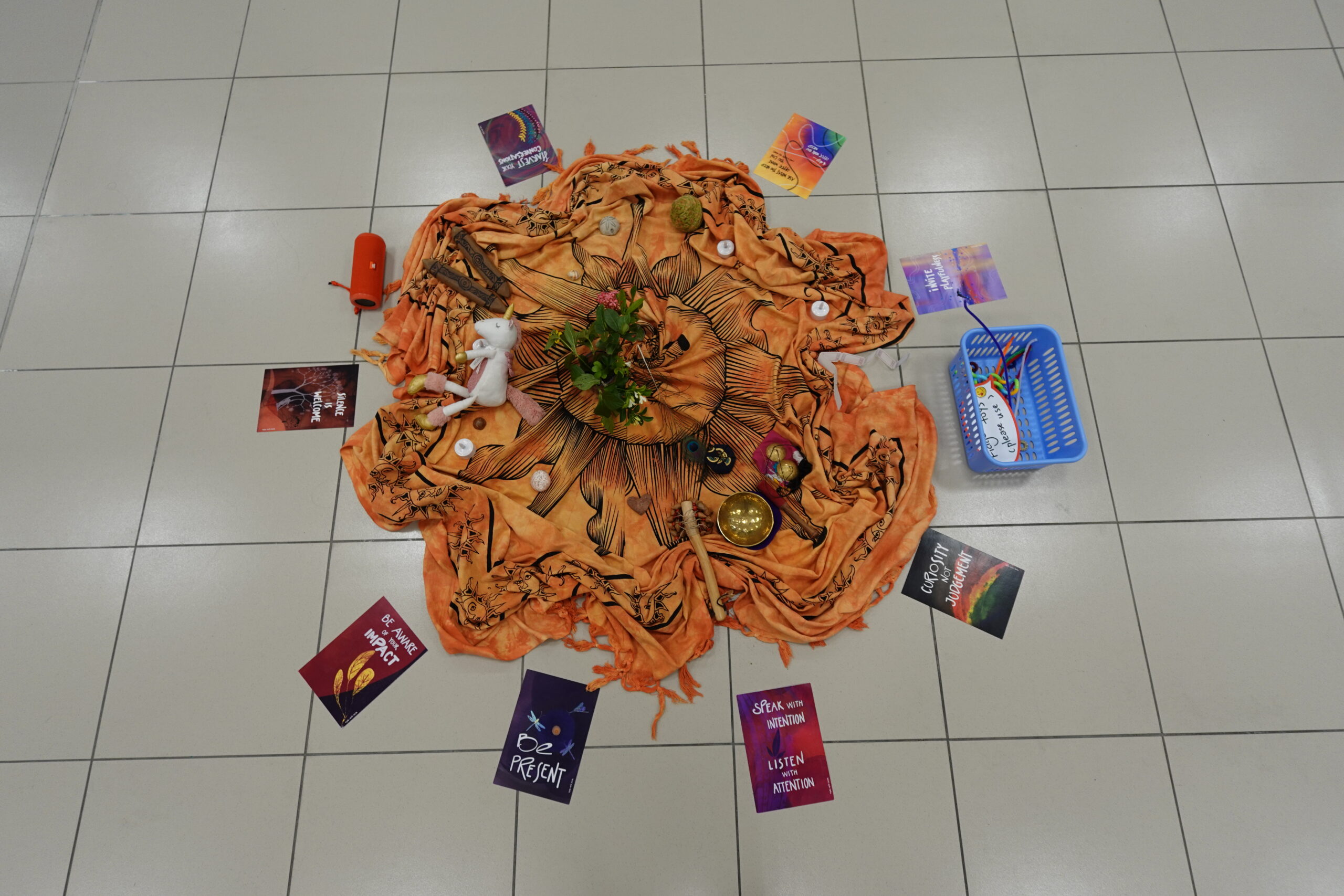
大教室的一角,有一個圍起來的區塊,那是可以躲起來的休息區,允許大家自己決定何時暫停與何時再次投入。活動進行時,會有明確的指令,但較少反覆提醒的核對與確認,有一些靜默展示的標記與海報,相信大家都會遵守的那份尊重與大家願意遵守的那份參與,一起維持著這個空間。參與其中的我,突然覺察到自己帶著一種過度參與的習性,當允許選擇的自由鬆綁我之後,靠自己決定再參與是一種自由也是一種自主。
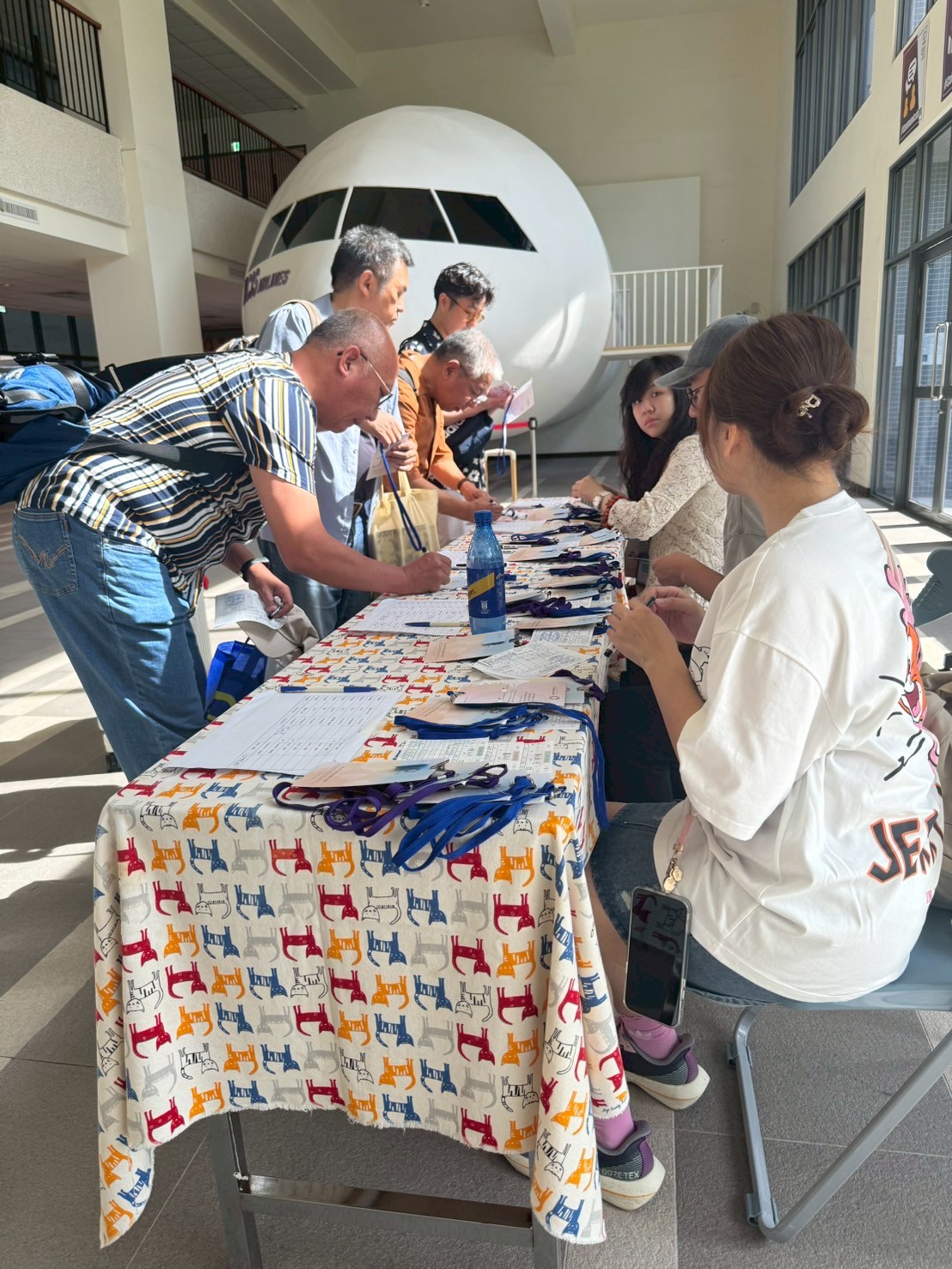
I travelled north on the island to Linkou. I was just a little late, so when I joined, everyone was already seated in a large circle in the big classroom. Visually, there was this subtle feeling of both looking around at everyone and being part of the crowd.
When I registered to Art of Hosting, I knew it would be a mix of English and Chinese. For someone like me who is more comfortable in Chinese, English was a challenge—but it also made me open my eyes wider, not just participating through language, but also watching with curiosity, noticing people’s expressions and body language, and hearing the tone and cadence beyond the words.
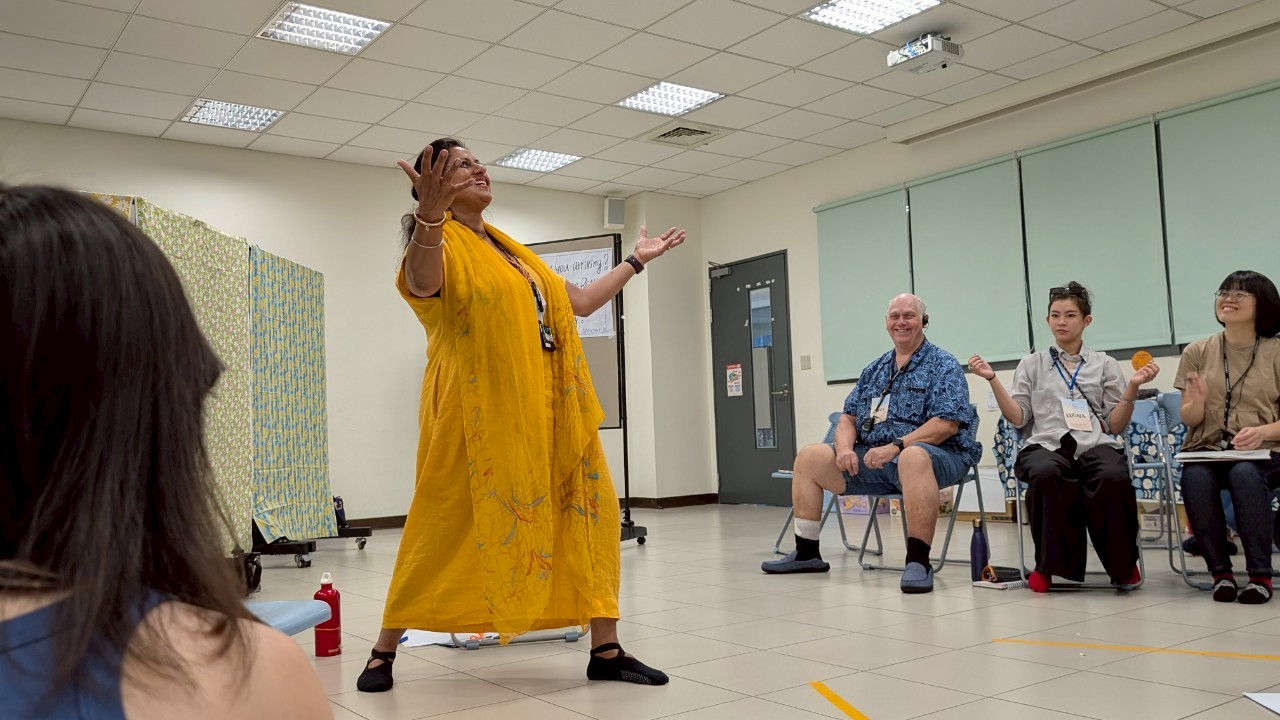
The first topic was Levels of Listening. I had encountered it in Theory U before, but I really appreciated the way it was presented today. The two facilitators used role-play to teach, acting out the different levels through expressions and gestures in everyday scenarios. Then, paired with nearby participants, we used hand and body movements to experience the differences between the four levels. In the first round, we took turns demonstrating for the other person; in the second, we did them simultaneously; and in the last, we each improvised all four levels. In that final round, when I made gestures showing I wanted to understand the other person but saw them cover their eyes, I felt a surprising sense of rejection. On the other hand, when our eyes met in mutual recognition—without words, just body and facial expressions—and we both smiled, that moment of shared understanding was delightful.
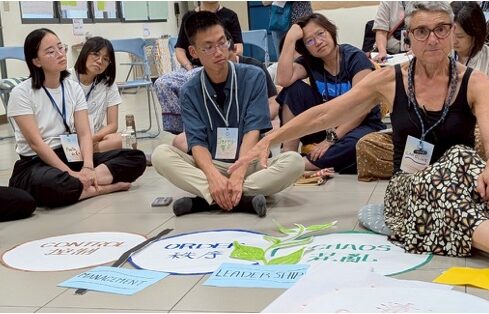
In the Story Trio, we formed groups of three to share a personal story about a recent challenge in working with others. The “trio” meant that each of us took a turn in three roles: storyteller, listener, and silent observer. Following on from what we had just learned about listening levels, this segment was a perfect chance to notice what level we ourselves were in as listeners, and to observe where the storyteller and listener were operating. In my group, I heard a story about being challenged in an international context, and another about self-challenge in one’s work… Although the contexts were different, there seemed to be a shared core in how we respond to challenges. Back in the main classroom, our trio worked together on a sheet of paper, visually representing the key element we felt was at the heart of responding to challenges. We then displayed all the group drawings in the center. Quietly looking at them, I noticed recurring elements, as if they were echoes that whispered,“Others have thought the same way, too.”
The afternoon began with a small ball in the shape of a soccer. The first group of volunteers split into two teams and started “playing” without any explanation. Since the ball looked like a soccer ball, people tried kicking it, but there were no clear rules for scoring, no referee—just chaos, with everyone kicking here and there. I couldn’t even tell who was on which team. Amid the confusion and laughter, the round ended. In the second round, players had to wait for explicit instructions from a designated leader before moving, which slowed everything down. The ball moved faster than the instructions could be given. The third round began with rules explained and team discussions beforehand; as a result, the pace was quicker and more orderly. But in the final debrief, many people felt the chaos of the first round was actually the most fun, while the leader in the second round had to shoulder too much. Back in the big circle, this led into a teaching on The Chaordic Path.
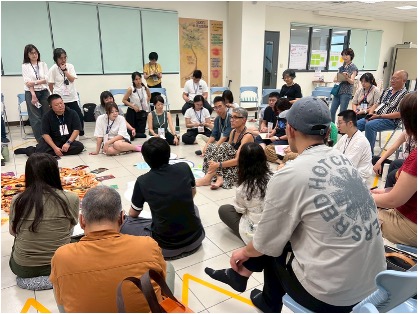
When we gathered in a circle again, one facilitator led while the other rang a bell. When the bell sounded, we had to pause—silent, centered, and focused. Everyone formed a big circle and the group’s attention gave the space a certain gravity. The facilitator posed the question: “In order to step into collaboration with courage, I need …” Maybe because I came with my own question in mind, when the talking piece—a hollow macadamia shell shaped like a heart—reached my hands, I felt inspired by the collective energy to voice my true hope. It was something I had never told anyone before, nor even fully realized myself. Each person could only speak once. After my turn, I listened intently to others. I noticed that some people carefully held the macadamia shell but passed it on without speaking, honoring the fact that not everyone was ready. When people spoke too quickly, the bell would sound—pause—then ring again to allow the next person to continue. These pauses are rare in our everyday lives, where we rush through things without depth. In contrast, here in the circle, each person spoke just one thing, offered after internal focus.
When the talking piece came to me in the second round, I simply passed it on. But in that passing, it felt like a kind of shared declaration: I had voiced my hope, and I had heard the hopes of others.
In one corner of the big classroom was a closed-off area—a rest zone—where anyone could retreat and choose when to rejoin. During activities, there were clear instructions but few repeated reminders or checks. There were silent visual cues, like signs and posters, relying on mutual respect and the shared willingness to hold the space together. While participating, I suddenly became aware of my own tendency to over-participate. Once I realized I was free to choose, the decision to re-engage felt both like a freedom and an act of self-agency.
Welcome & Framing, Check-in
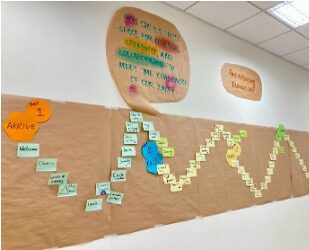
Teach : 4 Levels of listening
Story trio
Teach : The Chaordic path
Journaling
AoH pedagogy tree
Teach : Breath pattern
Day 1 Harvesting
Sign-up for practice